


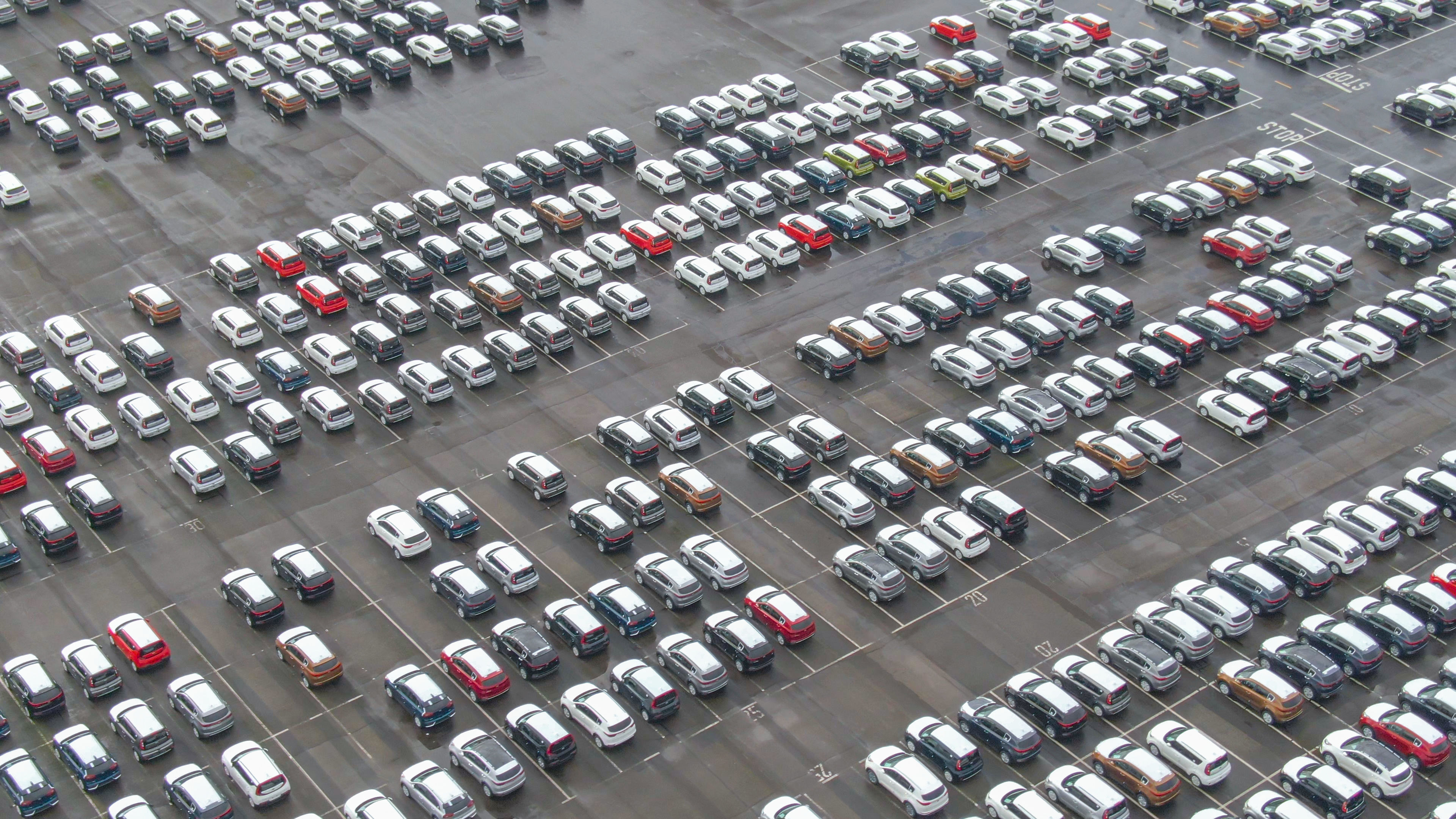
In 2025 as a whole, a total of just under 2.86 million new passenger cars were registered in Germany, representing an increase of 1.4 percent over the previous year. These included over 1.2 million passenger cars from international brands, which thus had a market share of a good 42.4 percent. In December 2025, new passenger car registrations totaled 246,439 vehicles, an increase of 9.7 percent over the same month last year, with one more working day. The calendar-adjusted year-on-year growth is therefore +3.9 percent. This strong end-of-year surge was also driven by the second stage of the Euro 6e emissions standard, which has been in force for newly registered passenger cars since January 1. New registrations of passenger cars from international brands accounted for around 43.0 percent of the total market in December. This is according to an analysis of figures from the Federal Motor Transport Authority (KBA) by the Association of International Motor Vehicle Manufacturers (VDIK).
VDIK President Imelda Labbé: “The overall passenger car market grew in 2025 and is slightly above manufacturers’ forecasts. However, the share of battery electric vehicles remains below expectations. Although international car manufacturers have contributed disproportionately to growth in these segments with affordable BEVs and plug-in hybrids and have boosted the electric car market with a strong product offensive, the market for battery electric vehicles has not yet reached the level of growth that was expected. Nevertheless, the overall market share was still not sufficient to meet the CO2 fleet limits. It is therefore right that the EU Commission has announced that it will make the limits more flexible. To ensure that the market for electric cars and PHEVs can continue to grow, the VDIK is urging the German government to quickly finalize the promised support measures and put them into effect retroactively from January 1.
Over 545,000 purely battery-electric passenger cars (BEVs) were newly registered in 2025, representing an increase of 43.2 percent over the previous year. However, this means that the number of newly registered BEVs is below the VDIK forecast for 2025 of 570,000 vehicles. Around 19.1 percent of all newly registered passenger cars in 2025 were exclusively battery-electric, which is still below the level required to achieve the CO2 limit targets. New registrations of BEVs for international brands are expected to have risen at an above-average rate compared to the previous year, by 59.3 percent to 214,381 vehicles. This accounted for around 39.3 percent of all new BEV registrations.
In December 2025, new BEV registrations totaled 54,774 passenger cars, an increase of 63.2 percent over the same month last year. For international brands, the number of new BEV registrations doubled compared to the same month last year. Overall, the market share of purely battery-electric passenger cars in December 2025 was 22.2 percent, around 7.3 percentage points higher than in the same month of the previous year. The BEV market shares in November and December 2025 are thus the highest since the end of the BEV purchase subsidy two years ago.
Plug-in hybrids (PHEVs) recorded particularly strong growth in 2025 as a whole. New PHEV registrations rose by 62.3 percent year-on-year to 311,398 vehicles. This corresponds to a market share of 10.9 percent, which is around 4.1 percentage points higher than in the previous year. In the PHEV market, international brands are expected to have put 120,672 new vehicles on the road in 2025, an increase of 65.4 percent over the previous year. Their market share was thus 38.8 percent of the total PHEV market. In December 2025, new registrations of PHEV passenger cars totaled 30,259 vehicles (+58.4 percent), which corresponds to approximately 12.3 percent of all new passenger car registrations. International brands had a market share of 36.0 percent of the total PHEV market in December.
In total, electric vehicles – i.e., BEVs and PHEVs combined – will account for 856,540 new passenger car registrations in 2025, 49.6 percent more than in the previous year. Their market share was 30.0 percent, up from 20.3 percent in 2024. In December, the electric market share was 34.5 percent, the third-highest figure in three years.
The number of new commercial vehicle registrations in 2025 totaled 350,122, which was 6.6 percent lower than in the previous year. In December 2025, 28,706 new commercial vehicles were registered (-1.1 percent).
| December | January – December | |||||
|---|---|---|---|---|---|---|
| +/- (%) | Share of total car market (%) |
+/- (%) | Share of total car market (%) |
|||
| Passenger cars | 246.439 | 9,7 | 2.857.591 | 1,4 | ||
| International brands | 105.929 | 9,2 | 43,0 | 1.212.679 | 1,2 | 42,4 |
| German brands | 135.649 | 11,1 | 55,0 | 1.596.700 | 2,3 | 55,9 |
| Elektric verhicles (total) | 85.033 | 61,5 | 34,5 | 856.540 | 49,6 | 30,0 |
| purely battery-powered | 54.774 | 63,2 | 22,2 | 545.142 | 43,2 | 19,1 |
| International brands* | 20.904 | 99,8 | 38,2 | 214.381 | 59,3 | 39,3 |
| German brands* | 30.277 | 65,5 | 55,3 | 298.220 | 47,6 | 54,7 |
| plug-in-hybrids | 30.259 | 58,4 | 12,3 | 311.398 | 62,3 | 10,9 |
| International brands* | 10.904 | 17,7 | 36,0 | 120.672 | 65,4 | 38,8 |
| German brands* | 19.018 | 94,9 | 62,9 | 186.924 | 59,1 | 60,0 |
| Commercial vehicles | 28.706 | -1,1 | 350.122 | -6,6 | ||
Source: KBA, VDIK