


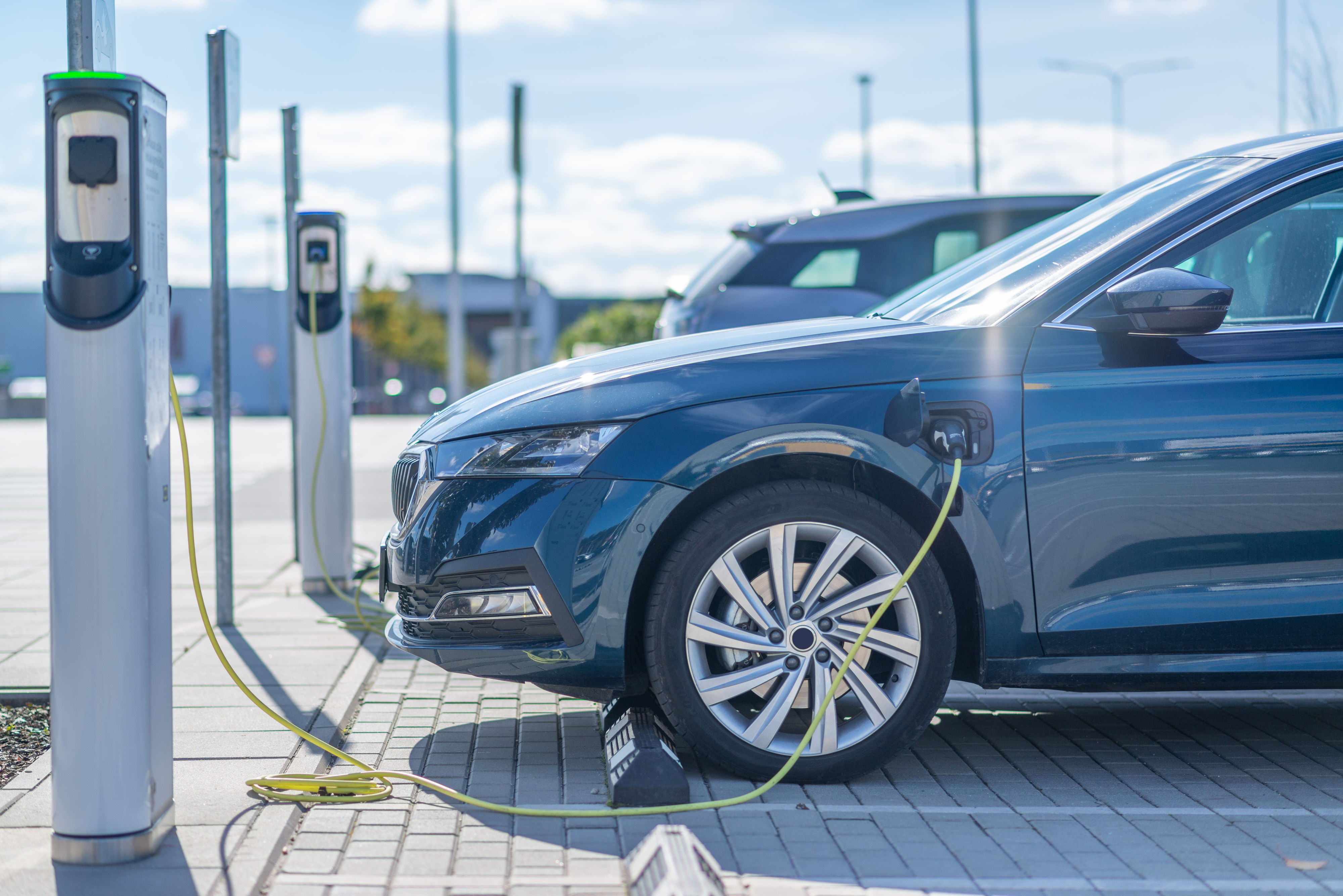
In November, the market for alternative drive systems (pure electric, plug-in and non-plug-in hybrids, and gas-powered vehicles) grew by 22.5 percent to 160,125 units, with international brands accounting for around 40.1 percent. This is according to an analysis of figures from the Federal Motor Transport Authority (KBA) by the Association of International Motor Vehicle Manufacturers (VDIK). The share of new registrations with alternative drive systems in the overall market rose to 63.9 percent in November, compared to 53.4 percent in November 2024. Since the beginning of the year, almost 1.53 million passenger cars with alternative drive systems have been newly registered, around 25.4 percent more than in the same period last year.
VDIK President Imelda Labbé: “The German government’s planned program to promote electric cars comes at the right time and could give further impetus to the current positive market trend next year. This is also urgently needed in order to get enough electric cars and plug-ins on the road and thus achieve CO2 fleet limits and climate targets. However, for the program to be effective, it is crucial that the purchase of used vehicles is also included. The subsidy must apply retroactively to purchase contracts from January 1, 2026, with applications already being submitted at the time of purchase. It is also important that the eligibility requirements are checked in as unbureaucratic a manner as possible. The VDIK rejects protectionist measures. We call for fair, competition-neutral requirements that do not disadvantage international manufacturers and do not exclude vehicles that are well suited to the target group due to their purchase prices and can significantly improve the climate balance.”
As in previous months, new registrations of purely battery-electric passenger cars (BEVs) rose significantly in November, by 58.5 percent to 55,741 units. The share of BEVs in total new passenger car registrations thus reached a new high of 22.2 percent. International manufacturers saw BEV registrations increase by 104.5 percent to 21,621 vehicles. This brings the BEV market share of international manufacturers since the beginning of the year to 39.5 percent, which is 3.7 percentage points more than in 2024. The total market share of BEV passenger cars has been 18.8 percent since January 2025, which is still not enough to meet the CO2 fleet limits.
New registrations of plug-in hybrid vehicles (PHEVs) also recorded another significant increase in November. 32,433 new PHEVs hit the roads, 57.4 percent more than in the same month last year. Their share of all new passenger car registrations rose to 12.9 percent, by far the highest figure since the end of the PHEV purchase subsidy at the end of 2022. The market share of international vehicle manufacturers in the plug-in hybrid segment was 35.3 percent in November. After eleven months, the PHEV market has a market share of 10.8 percent in the current year, which is 4.1 percentage points higher than in the same period last year.
Together, electric vehicles (BEVs, plug-in hybrids, and fuel cell vehicles) accounted for a market share of 35.2 percent in November, with 88,176 new registrations. This represents an increase of 58.1 percent compared to the same month last year. Since the beginning of the year, the electric market has grown by 48.4 percent.
For the first time in over a year, non-plug-in hybrid vehicles recorded a decline of 4.1 percent in November. 70,916 new registrations correspond to a share of 28.3 percent of new passenger car registrations. In the same month last year, the market share was still 30.2 percent. The market share of international vehicle manufacturers in the hybrid segment was 42.5 percent in November 2025.
In addition, 1,033 new liquefied petroleum gas passenger cars (+9.7 percent) rolled onto the roads in November. Since the beginning of the year, new registrations of liquefied petroleum gas passenger cars have totaled 10,968 units (-12.9 percent).
New registrations of pure combustion engine passenger cars reached 90,538 units in November, of which 61,067 were gasoline-powered (-21.1 percent) and 29,471 were diesel-powered (-19.3 percent). Gasoline engines accounted for 24.4 percent of passenger car registrations, while diesel engines accounted for 11.8 percent.
| November | January-November | |||||||
|---|---|---|---|---|---|---|---|---|
| +/- (%) | Share of total car market (%) | Share of international brands (%) | +/- (%) | Share of total car market (%) | Share of international brands (%) | |||
| BEV | 55.741 | 58,5 | 22,2 | 38,8 | 490.368 | 41,3 | 18,8 | 39,5 |
| PHEV | 32.433 | 57,4 | 12,9 | 35,3 | 281.139 | 62,7 | 10,8 | 39,0 |
| FCEV | 2 | -71,4 | 0,0 | – | 49 | -67,2 | 0,0 | 100,0 |
| Elektric Vehicles (total) | 88.176 | 58,1 | 35,2 | 37,5 | 771.556 | 48,4 | 29,5 | 39,3 |
| HEV including: | 70.916 | -4,1 | 28,3 | 42,5 | 744.838 | 8,7 | 28,5 | 45,9 |
| full-hybrid | 12.030 | -11,7 | 4,8 | 95,6 | 123.513 | 4,8 | 4,7 | 94,3 |
| mild-hybrid | 58.886 | -2,4 | 23,5 | 31,7 | 621.325 | 9,6 | 23,8 | 36,3 |
| CNG | 0 | 0,0 | 0,0 | – | 3 | -97,8 | 0,0 | 66,7 |
| LPG | 1.033 | 9,7 | 0,4 | 99,7 | 10.968 | -12,9 | 0,4 | 98,7 |
| Alternative Drivetrains (total) | 160.125 | 22,5 | 63,9 | 40,1 | 1.527.366 | 25,4 | 58,5 | 43,0 |
| Petrol | 61.067 | -21,1 | 24,4 | 43,6 | 715.724 | -22,4 | 27,4 | 41,6 |
| Diesel | 29.471 | -19,3 | 11,8 | 367.934 | -18,6 | 14,1 | ||
| Passenger cars (total) | 250.671 | 2,5 | 41,4 | 2.611.152 | 0,7 | 42,4 | ||
Electric vehicles: BEV, PHEV und FCEV
BEV, Batterieelektrisches Fahrzeug, engl: Battery Electric Vehicle
PHEV, Plug-In-Hybrid, engl: Plug-In Hybrid Electric Vehicle
FCEV, Brennstoffzellenfahrzeug / Wasserstofffahrzeug, engl.: Fuel Cell Electric Vehicle
Hybride, Hybrid ohne Stecker bzw. nicht aufladbar, engl.: Hybrid Electric Vehicle
CNG, Gasförmiges Erdgas, engl: Compressed Natural Gas
LPG, Flüssiggas bzw. Autogas, engl: Liquified Petroleum Gas
Models with a maximum e-motor output of 20 KW are classified as mild hybrids, while full hybrids have a maximum e-motor output of more than 20 KW.