

In August, the BEV market share of international manufacturers stood at 50.9 per cent, the highest figure recorded to date. The BEV market share of international manufacturers in the first eight months of 2026 was 46.2 per cent, which is 5.4 percentage points higher than in the same period of 2025. This is evident from an analysis of figures from the Federal Motor Transport Authority (KBA) carried out by the Association of International Motor Vehicle Manufacturers (VDIK).
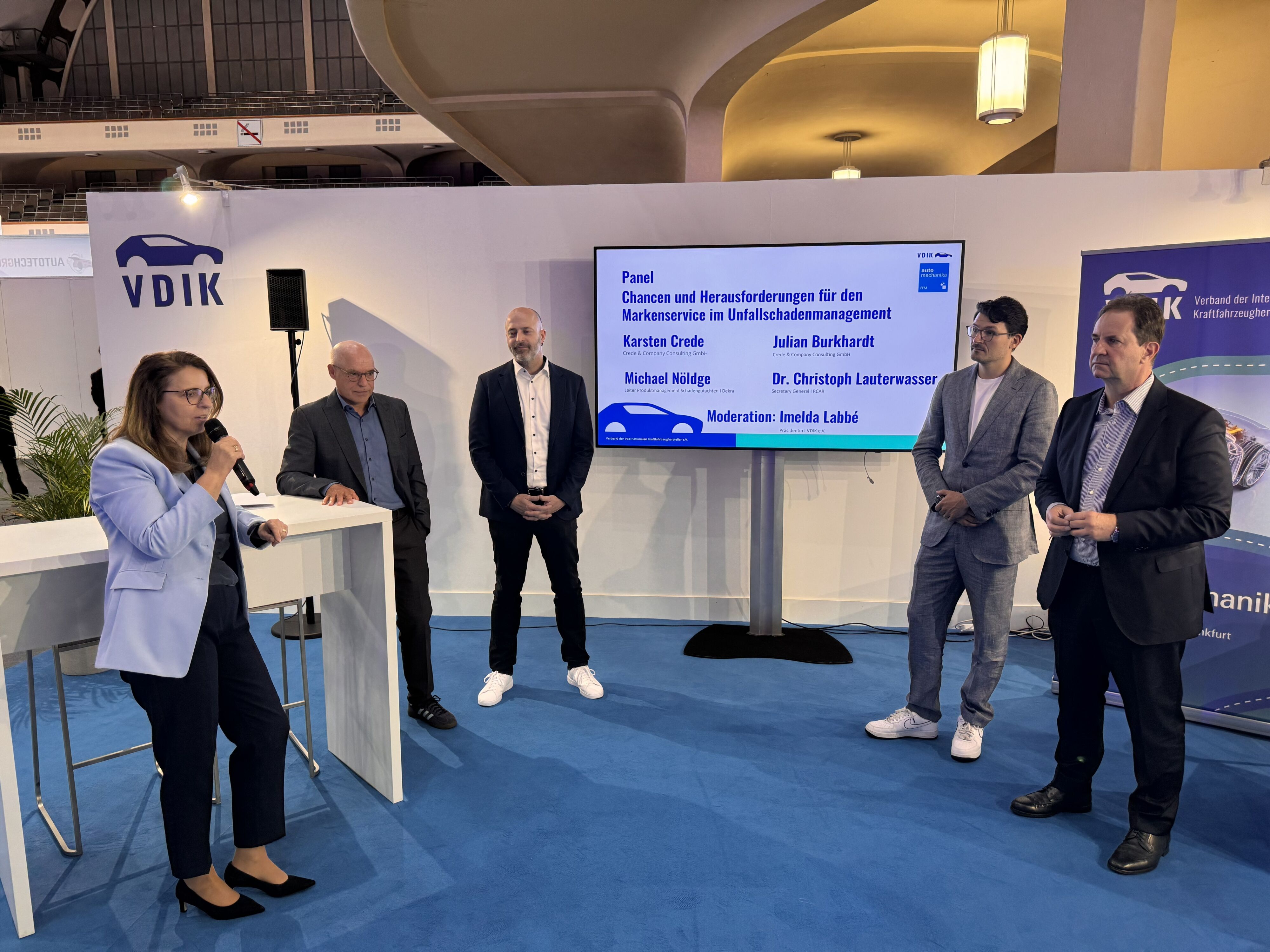
VDIK President Imelda Labbé said: “The car market in August impressively demonstrates just how dynamically electric mobility is currently developing. Almost one in three new cars is now purely electric. Among international manufacturers, the share of BEVs even exceeded 50 per cent for the first time. The Škoda Elroq, the month’s best-selling electric car, also demonstrates just how diverse and attractive the model range of international manufacturers is. It is now crucial to continue supporting this growth with a reliable political framework.”
Across the market as a whole, new registrations of battery electric vehicles (BEVs) rose by 75.1 per cent in August to 68,930 units. The share of BEVs in total new passenger car registrations thus reached 32.4 per cent, which is around 13.4 percentage points higher than in the same month last year and, at +3.1 percentage points, also significantly higher than the market share in the previous month. Since January 2026, the total market share of BEV passenger cars has so far stood at 26.2 per cent.
For alternative powertrains as a whole (purely electric, plug-in and non-plug-in hybrids, and natural gas), the market grew by 25.9 per cent in August to 154,504 units, with international brands accounting for around 46.7 per cent. The share of new registrations with alternative powertrains in the overall market rose to 72.7 per cent in August; in August 2025, this figure stood at 59.2 per cent. In the first eight months of 2026, 1,306,190 passenger cars with alternative powertrains were newly registered, representing an increase of around 22.2 per cent compared with the same period last year.
New registrations of plug-in hybrid vehicles (PHEVs) also recorded positive growth rates once again in August. 25,406 new PHEVs hit the roads, representing an increase of 6.0 per cent compared with the same month last year. This represented 12.0 per cent of all new passenger car registrations, around 0.4 percentage points higher than in August 2025. The market share of international car manufacturers in the plug-in hybrid segment stood at 43.8 per cent in August. After eight months, the PHEV market has achieved a total market share of 11.2 per cent in the current year.
Taken together, electric vehicles (BEVs, plug-in hybrids and fuel cell vehicles) thus accounted for a market share of 44.4 per cent in August, with 94,336 new registrations. This represents an increase of 48.9 per cent compared with the same month last year. In the first eight months of 2026, the electric vehicle market stands at 735,364 new registrations, up 39.6 per cent.
New registrations of non-plug-in hybrid vehicles rose slightly in August, by 1.0 per cent. The 59,197 new registrations account for 27.8 per cent of all new passenger car registrations. The market share of international car manufacturers in the hybrid segment stood at 42.3 per cent in August 2026. Since the start of the year, new registrations of non-plug-in hybrid vehicles have been around 5.2 per cent higher than in the same period last year.
In addition, 971 LPG passenger cars (+22.1 per cent) were newly registered in August. Since the start of the year, new registrations of LPG passenger cars have totalled 9,320 units (+14.9 per cent).
New registrations of purely internal combustion engine cars reached 58,052 units in August, of which 35,536 were petrol-powered (-37.9 per cent) and 22,516 were diesel-powered (-17.3 per cent). Petrol cars accounted for 16.7 per cent of passenger car registrations, whilst diesel cars accounted for 10.6 per cent.
| August | Januar-August | |||||||
|---|---|---|---|---|---|---|---|---|
| +/- (%) | Share of total car market (%) | Share of international brands (%) | +/- (%) | Share of total car market (%) | Share of international brands (%) | |||
| BEV | 68.930 | 75,1 | 32,4 | 50,9 | 515.545 | 53,1 | 26,2 | 46,2 |
| PHEV | 25.406 | 6,0 | 12,0 | 43,8 | 219.808 | 15,6 | 11,2 | 41,1 |
| FCEV | 0 | -100,0 | 0,0 | 0,0 | 11 | -76,1 | 0,0 | 100,0 |
| Electric Vehicles (total) | 94.336 | 48,9 | 44,4 | 49,0 | 735.364 | 39,6 | 37,4 | 44,7 |
| HEV including: | 59.197 | 1,0 | 27,8 | 42,3 | 561.505 | 5,2 | 28,6 | 42,7 |
| full-hybrid | 12.435 | 12,5 | 5,9 | 85,5 | 93.154 | 8,4 | 4,7 | 87,4 |
| mild-hybrid | 46.762 | -1,7 | 22,0 | 30,8 | 468.351 | 4,6 | 23,8 | 33,9 |
| CNG | 0 | 0,0 | 0,0 | 1 | -66,7 | 0,0 | 100,0 | |
| LPG | 971 | 22,1 | 0,5 | 99,7 | 9.320 | 14,9 | 0,5 | 99,6 |
| Alternative Drivetrains (total) | 154.504 | 25,9 | 72,7 | 46,7 | 1.306.190 | 22,2 | 66,5 | 44,2 |
| Petrol | 35.536 | -37,9 | 16,7 | 47,5 | 411.348 | -21,9 | 20,9 | 45,1 |
| Diesel | 22.516 | -17,3 | 10,6 | 247.376 | -11,4 | 12,6 | ||
| Passenger car (total) | 212.563 | 2,6 | 47,0 | 1.965.024 | 4,8 | 44,5 | ||
Electric vehicles: BEV, PHEV und FCEV
BEV, Batterieelektrisches Fahrzeug, engl: Battery Electric Vehicle
PHEV, Plug-In-Hybrid, engl: Plug-In Hybrid Electric Vehicle
FCEV, Brennstoffzellenfahrzeug / Wasserstofffahrzeug, engl.: Fuel Cell Electric Vehicle
Hybride, Hybrid ohne Stecker bzw. nicht aufladbar, engl.: Hybrid Electric Vehicle
CNG, Gasförmiges Erdgas, engl: Compressed Natural Gas
LPG, Flüssiggas bzw. Autogas, engl: Liquified Petroleum Gas
Models with a maximum e-motor output of 20 KW are classified as mild hybrids, while full hybrids have a maximum e-motor output of more than 20 KW.