

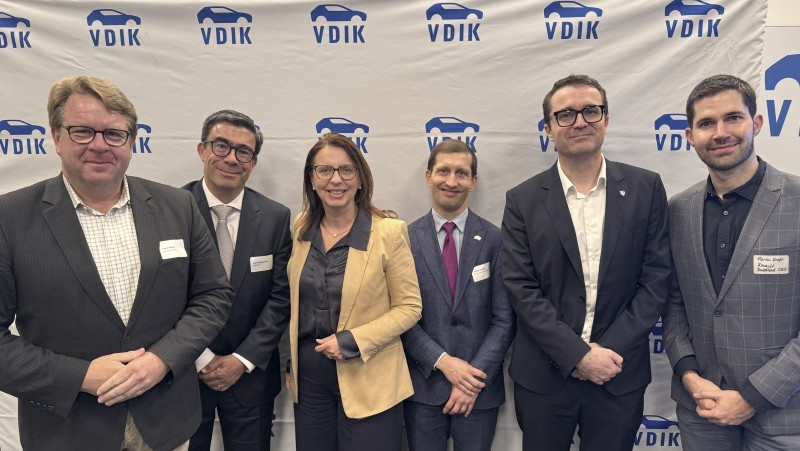
French manufacturers are among the leading importers in Germany and have managed to grow this year beyond the already strong market growth of five per cent. Germany and France can work together to ensure that growth in Europe remains possible in the future. This requires better conditions for innovation and investment, competitive production costs and a coordinated European industrial policy. This became clear during the France-focused session as part of the parliamentary series organised by the Association of International Motor Vehicle Manufacturers (VDIK) in Berlin.
“Germany and France bear a special responsibility for the future of the automotive industry and for affordable personal mobility in Europe. Together, we must create framework conditions that enable innovation and investment whilst strengthening industrial value creation. Franco-German cooperation in the aviation sector can serve as an example here. Our aim must be to ensure that automotive history continues to be written in Europe in the future,” said VDIK President Imelda Labbé.
The event focused on the international competitiveness of the European automotive industry, the transition to electric mobility and the intensifying competition.
Jérôme Brouillet, Economic Attaché at the French Embassy, highlighted the particular importance of Germany and France, which together account for 39 per cent of the EU’s economic output. In view of increasing international competition, both countries must work together to find viable solutions regarding the European Automotive Package. It is important to combine flexibility for manufacturers with a strengthening of industrial value creation in Europe. However, Europe must not isolate itself: the aim is not a ‘Fortress Europe’, but closer cooperation with like-minded partners.
Jean-André Barbosa, Director of Public Affairs at the Renault Group, emphasised the economic importance of the automotive industry: every euro invested in the sector generates four euros in economic output. France has 14 vehicle manufacturing plants and a strong supply industry. At the same time, the production of electric vehicles in Europe is hampered by high labour, energy and production costs. In his view, rising vehicle prices are attributable roughly half to inflation and half to regulation and taxes. Electrification is nevertheless proving successful, and the market for electric vehicles exists.
Europe is particularly well-positioned in terms of production, marketing and sales, but needs to step up its efforts in innovation, research and development. Bureaucracy has been shown to hamper innovation in Europe. Barbosa pointed out that significant development capacity is tied up by the implementation of regulatory requirements. Instead of additional regulation, the industry needs more scope for innovation. He described the European Automotive Package as the most complex challenge facing the European automotive industry in 25 years.
Marie Defrance, Managing Director of the French importers’ association CSIAM, outlined the French measures to promote electric mobility. These include social leasing and the Ecoscore, which takes into account, amongst other things, a vehicle’s carbon footprint. Vehicles that do not meet the relevant criteria do not receive any subsidies or tax benefits. Defrance advocated harmonising such instruments at European level. Additional national requirements increase complexity and lead to unequal competitive conditions within the European single market.
A key focus of the panel was the strategic importance of batteries. Discussions centred on how Europe can build up its own expertise and value creation without jeopardising competitiveness in the face of global overcapacity and low battery prices. The discussion also covered opportunities arising from cooperation and the potential of European alliances, backed by political support, to shape this core technology for the automotive industry in a sustainable manner.
The VDIK’s parliamentary series brings together politicians, the automotive industry and international partners to discuss the competitiveness of the European automotive industry and joint responses to the sector’s global transformation.
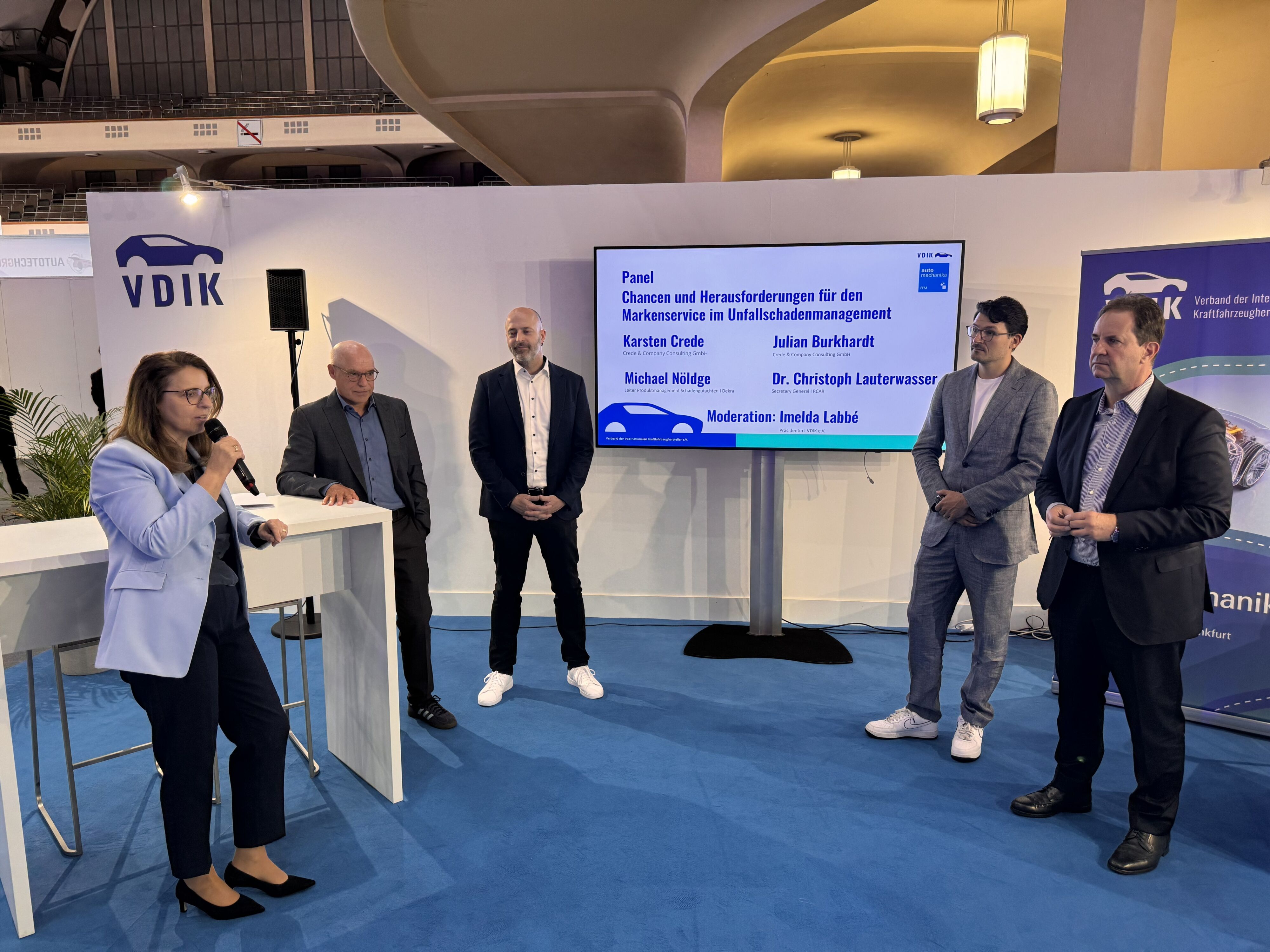
Press photo: VDIK Parliamentary Series – Focus on France (Source: VDIK)