

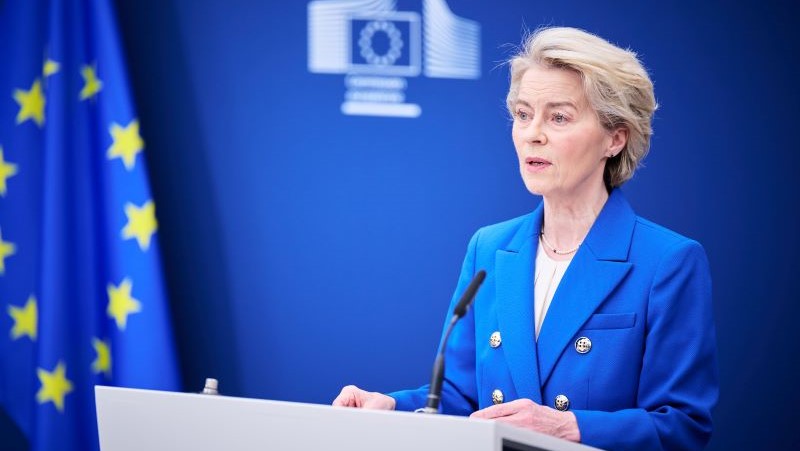
The Association of International Motor Vehicle Manufacturers (VDIK) notes the absence of concrete answers to pressing questions facing the automotive industry in the State of the Union address delivered by European Commission President Ursula von der Leyen. Whilst the Commission has announced faster approvals, the expansion of electricity grids and support for innovation, it remains unclear how affordable charging electricity, less red tape, a future for plug-in hybrids and achievable CO₂ fleet targets are to be implemented.
“Whilst commercial vehicle manufacturers are demonstrating at the IAA Transportation in Hanover just how many zero-emission lorries and vans are already available, the Commission President’s silence on the conditions for the commercial deployment of these vehicles is disappointing,” explains VDIK President Imelda Labbé. “The review of the CO₂ fleet regulation for heavy commercial vehicles must therefore be brought forward. Hauliers and other fleet operators need predictable operating costs and reliable charging facilities; manufacturers need realistic and predictable targets.”
The ramp-up of electric mobility in logistics requires European solutions. Supply chains are international in scope, and vehicles travel across borders. The European Commission must therefore coordinate the development of high-capacity charging corridors, speed up approvals and create the conditions for competitive charging prices. So far, it has failed to fulfil this responsibility with general announcements.
Furthermore, promoting innovation must become a strategic priority in European industrial policy. The EU must support research, development and the market launch of new vehicle technologies, facilitate industrial alliances and remove bureaucratic hurdles. To drive more innovation, the automotive industry needs concrete instruments, clear responsibilities and timetables.
“Europe’s position as an automotive hub depends on its ability to bring new technologies to market quickly,” said Labbé. “The EU has a key role to play in promoting innovation, forming industrial alliances and reducing bureaucracy. Whilst the Commission President’s speech contains declarations of intent in this regard, it does not set out a robust plan for the automotive industry. The Commission must finally make decisive use of innovation funding as a lever to safeguard the sector’s future.”
The VDIK is therefore calling on the European Commission to present concrete measures for affordable charging electricity in the near future, to bring forward the review of fleet regulations for commercial vehicles, to create a clear future for plug-in hybrids and to provide greater support for innovation.