E-mobility appeals to private customers: BEVs continue to gain ground in new registrations
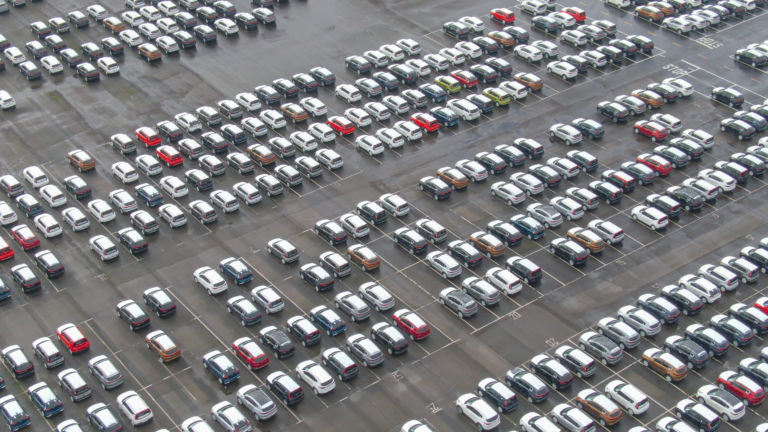
In April 2026, new passenger car registrations in Germany totaled 249,163 vehicles, marking a 2.7 percent increase compared to the same month last year, with the same number of working days. This is according to an analysis of figures from the Federal Motor Transport Authority (KBA) conducted by the Association of International Motor Vehicle Manufacturers (VDIK). Since the beginning of the year, a total of 4.5 percent more vehicles have been newly registered than in the first four months of the previous year. This amounted to a total of 948,567 passenger cars, including 414,249 vehicles from international brands, which thus held a total market share of 43.7 percent since the start of the year. In April, this share stood at 43.2 percent.
64,350 all-electric passenger cars (BEVs) were newly registered in April 2026, representing a 41.3 percent increase compared to the same month last year. New registrations for international brands are expected to have risen by an above-average 51.3 percent to 28,699 vehicles, giving them a BEV market share of 44.6 percent. The total BEV market share in April 2026 stood at 25.8 percent of all new passenger car registrations, approximately 7.0 percentage points higher than in the same month of the previous year and, at +1.8 percentage points, also significantly higher than the market share in the previous month. This is the highest market share since the end of the commercial BEV purchase incentive over two and a half years ago. Since the beginning of the year, a total of 223,980 BEVs have been newly registered, representing a 41.3 percent increase compared to the same period last year. International brands accounted for approximately 43.2 percent of this total. The BEV market share for the first four months of 2026 totals 23.6 percent.
VDIK President Imelda Labbé: “Private customers are now embracing electric mobility just as much as fleet customers have been doing: New registrations of private BEVs have risen by an above-average 82.6 percent compared to the same quarter last year. Customers appreciate both the growing product range and the near cost parity in the entry-level segments. Affordability is key to the acceptance of e-mobility. This also applies to operating costs, where we see a cost advantage for electric vehicles due to the current situation.”
Plug-in hybrids (PHEVs) also saw an increase in April compared to the same month last year. New PHEV registrations rose by 13.3 percent last month to 27,546 vehicles. This corresponds to a market share of 11.1 percent, which is approximately 1.1 percentage points higher than the figure for the same month last year and 0.9 percentage points higher than the market share in March 2026. In the PHEV market, international brands are estimated to have put 11,318 new vehicles on the road in April, giving them a market share of 41.1 percent of the total PHEV market. A total of 103,660 new PHEV passenger cars have been registered since the beginning of the year (+17.6 percent), giving them a cumulative market share of 10.9 percent of all new passenger car registrations. Since the beginning of the year, international brands have held a market share of 38.4 percent of the total PHEV market.
In total, electric vehicles—that is, BEVs and PHEVs combined—accounted for 91,896 new passenger car registrations in April, an increase of 31.6 percent compared to the same month last year. Their market share stood at 36.9 percent (April 2025: 28.8 percent). Since the beginning of the year, 327,640 electric vehicles have been newly registered, bringing their market share to 34.5 percent.
The number of new commercial vehicle registrations in April was 27,710, up 0.6 percent from April of the previous year. Since January 2026, 106,233 new commercial vehicles have been registered (-3.5 percent).
| April | January – April | |||||
|---|---|---|---|---|---|---|
| +/- (%) | Share of total car marekt (%) | +/- (%) | Share of total car marekt (%) | |||
| Passenger cars | 2,7 | 4,5 | ||||
| International brands | 3,8 | 43,2 | 5,5 | 43,7 | ||
| German brands | 0,1 | 55,1 | 2,0 | 54,2 | ||
| Elektric vehicles (total) | 31,6 | 36,9 | 32,9 | 34,5 | ||
| purely battery-powered | 41,3 | 25,8 | 41,3 | 23,6 | ||
| International brands* | 51,3 | 44,6 | 53,6 | 43,2 | ||
| German brands* | 26,0 | 49,9 | 24,6 | 49,2 | ||
| plug-in-hybride | 13,3 | 11,1 | 17,6 | 10,9 | ||
| International brands* | 14,8 | 41,1 | 1,8 | 38,4 | ||
| German brands* | 11,4 | 58,4 | 30,2 | 61,3 | ||
| Commercial vehicles | 0,6 | -3,5 | ||||
Quelle: KBA, VDIK