VDIK forecast for 2026: Slight market recovery only with appropriate framework conditions
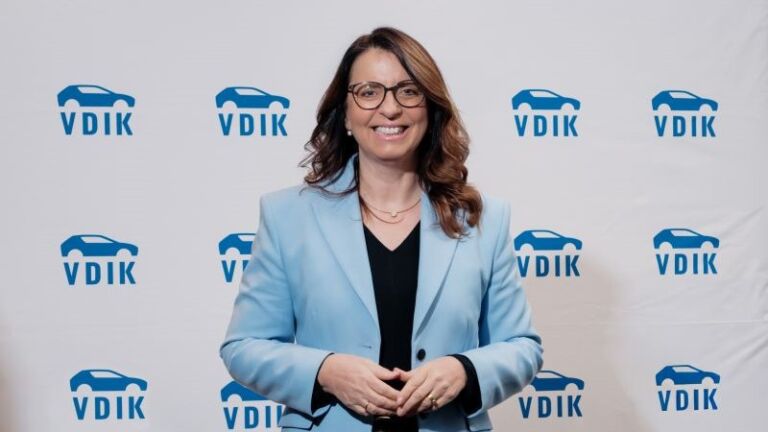
The Association of International Motor Vehicle Manufacturers (VDIK) currently expects around 2.9 million new passenger car registrations in 2026. However, the forecast depends mainly on how the framework conditions for electric vehicles develop. “Our prediction is based on the assumption that the German government’s planned support for private electric car customers will start retroactively at the beginning of 2026 and that competitive, transparent electricity prices with comprehensive infrastructure will be created at the same time. Should there be additional delays in the introduction, potential electric car customers could continue to wait and thus prevent a market recovery,” said VDIK President Imelda Labbé.
The market share of international vehicle manufacturers has risen from 35.9 percent in 2014 to 43 percent in the current year 2025. In the private market, their share is as high as 53.2 percent. This means that, on average, they have performed better than the overall market in recent years. This represents a total of around 1.2 million vehicles, 11,000 more than in 2024. For the overall market, the VDIK expects around million passenger cars by the end of 2025, approximately 13,000 more than in the previous year.
Due to stricter CO2 fleet limits, manufacturers have made every effort to bring electric cars to market. These efforts have led to an increase in battery electric vehicles to 570,000 units and plug-in hybrids to 310,000 units in the overall market. However, the high growth rates of 50 percent for BEVs and 62 percent for plug-ins are mainly due to the low figures for 2024. Sales collapsed after the sudden end of subsidies in December 2023.
In almost all segments, international vehicle manufacturers offer the most affordable battery electric vehicles. As a result, they gained 3.9 percentage points in BEVs, achieving a market share of 41.2 percent. The market share for plug-in hybrids rose disproportionately by 3.7 percentage points, demonstrating the appeal of the broad model and drive portfolio offered by international manufacturers.
“If the federal government responds to the VDIK’s demands for improvements to the subsidy framework, the market for battery electric vehicles is likely to grow by around 170,000 vehicles in 2026, reaching around 740,000 units. With the associated increase in the BEV share from currently 18.4 percent to 25.5 percent, the CO2 fleet limits could just be achieved next year. However, this is conditional on the subsidy being extended to the used car market and to include an electricity cost component. The forecast continues to assume that the term will be at least three years, that it will come into force retroactively on January 1, 2026, and that it will be implemented in an unbureaucratic, fair, and competition-neutral manner vis-à-vis international manufacturers,” Labbé continued. Otherwise, a BEV share of 20 percent and 640,000 vehicles is likely to fall short of this hurdle.
If plug-in hybrids also benefit from the subsidy, their number is likely to reach around 319,000 next year, with a market share of 11 percent. Plug-in hybrids can also make a noticeable contribution to achieving CO2 fleet limits compared to pure combustion engines when used appropriately. The VDIK is therefore calling on the EU Commission to refrain from the planned reduction of the utility factor from January 2026. This is the only way to create a meaningful framework for the German government’s planned subsidy.
The automotive industry is currently looking eagerly to Brussels, where the announced automotive package is expected to be delayed somewhat. In addition to making the CO2 limits for new car fleets more flexible, the EU Commission has brought a possible electric car quota for vehicle fleets into play in this context. However, the VDIK considers this unrealistic due to the inadequate charging infrastructure in Europe. Positive incentives such as available and affordable charging power and more favorable company car taxation for electric cars and plug-in hybrids are more beneficial to electromobility than mandatory regulations.
During the press conference, VDIK President Labbé also presented the association’s six-point plan and the status of its implementation. This includes, among other things, the product offensive by international manufacturers, the prerequisites for bidirectional charging, and the issue of location attractiveness. Labbé particularly emphasized the measures to reduce bureaucracy in connection with the labeling requirements under the Passenger Car Energy Consumption Labeling Ordinance (Pkw-EnVKV).
To promote brand-specific after-sales business, the VDIK has recently launched a cooperation with Automechanika. The aim is to position the performance capabilities of VDIK members in a dynamic after-sales environment.
In order to prepare the next generation of managers in the retail and manufacturing sectors for the challenges of transformation, the VDIK is also launching a senior executive program next year in collaboration with the University of St. Gallen. The program is designed for the next generation of managing directors of automobile manufacturers, importers, and large car dealership groups.
Presentation