Electric mobility: affordable charging current is the most important incentive to buy
In October 2025, new car registrations in Germany rose by 7.8 percent year-on-year to 250,133 vehicles, with the same number of working days. This is according to an analysis of figures from the Federal Motor Transport Authority (KBA) by the Association of International Motor Vehicle Manufacturers (VDIK). New car registrations of international brands accounted for around 41.3 percent of the total market in October 2025. Since the beginning of the year, a total of 0.5 percent more vehicles have been registered than in the same period last year. That was a total of 2,360,481 passenger cars, including 1,003,048 vehicles from international brands. The share of international brands was thus 42.5 percent.
52,425 purely battery-electric passenger cars (BEVs) were newly registered in October 2025, representing an increase of 47.7 percent over the same month last year. New registrations for international brands are expected to have risen again at a significantly above-average rate of 76.9 percent to 21,454 vehicles, giving them a BEV market share of 40.9 percent (+5.0 percentage points compared to the same month last year). The total BEV market share in October 2025 was 21.0 percent of all new passenger car registrations, around 5.7 percentage points higher than in the same month last year and by far the highest figure since the end of the BEV purchase subsidy almost two years ago. Since the beginning of the year, a total of 434,627 BEVs have been newly registered, representing growth of 39.4 percent over the same period last year. International brands accounted for around 39.5 percent of this figure. The BEV market share for the first ten months of 2025 is 18.4 percent, which is still not at the level required to achieve the CO2 limit targets.
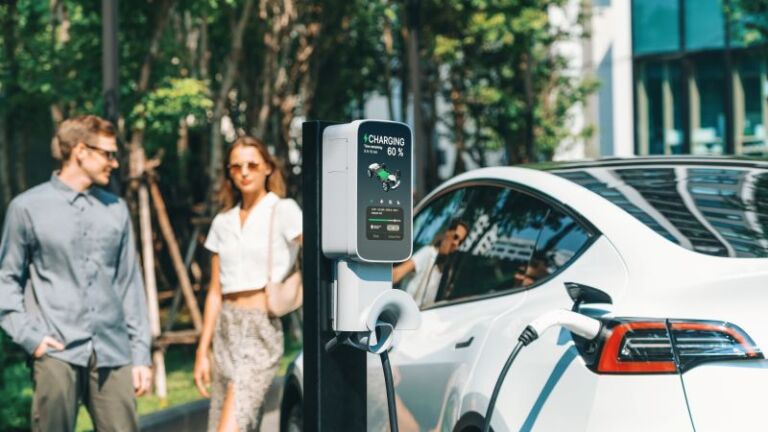
VDIK President Imelda Labbé: “So far, the German government’s innovation booster for commercially used electric vehicles has not had the desired effect, mainly because leased vehicles are not included. As a result, the share of electric cars among fleet customers has not increased in recent months. The private market has converged with the fleet level, so that the overall share of electric cars has now plateaued at around 20 percent. One reason for this stagnation is the continuing high cost of electricity for public charging. However, cheaper charging electricity is the most important and sustainable incentive for electric mobility. That is why the VDIK is advocating for a charging card or charging credit. This would particularly benefit electric car drivers who do not have their own wallbox and are dependent on public charging infrastructure.”
Plug-in hybrids (PHEVs) again recorded particularly strong growth in October compared with the same month last year. New PHEV registrations rose by 60.0 percent to 30,946 vehicles last month. This corresponds to a market share of 12.4 percent, which is around 4.1 percentage points above the previous year’s figure and by far the highest since the end of the PHEV purchase subsidy.
In the PHEV market, international brands are expected to have put 11,352 new vehicles on the road in October, an increase of 42.0 percent over the same month last year. Their market share was thus 36.7 percent of the total PHEV market. A total of 248,706 new PHEV passenger cars have been registered since the beginning of the year (+63.4 percent), giving them a market share of 10.5 percent of all new passenger car registrations. International brands have had a market share of 39.5 percent of the total PHEV market since the beginning of the year.
In total, electric vehicles – i.e., BEVs and PHEVs combined – accounted for 83,371 new passenger car registrations in October, 52.1 percent more than in the same month last year. Their market share was 33.3 percent (October 2024: 23.6 percent). Since the beginning of the year, 683,333 new electric vehicles have been registered, giving them a market share of 28.9 percent.
The number of new commercial vehicle registrations in October was 30,906, 1.9 percent lower than in October of the previous year. Since January 2025, 289,844 new commercial vehicles have been registered (-8.0 percent).
| October | January – October | |||||
|---|---|---|---|---|---|---|
| +/- (%) | Share of total car market (%) | +/- (%) | Share of total car market (%) | |||
| Passenger cars | 7,8 | 0,5 | ||||
| International brands | 5,0 | 41,3 | 0,3 | 42,5 | ||
| German brands | 10,2 | 57,4 | 1,5 | 55,9 | ||
| Elektric vehicles (total) | 52,1 | 33,3 | 47,2 | 28,9 | ||
| purely battery-powered | 47,7 | 21,0 | 39,4 | 18,4 | ||
| International brands* | 76,9 | 40,9 | 51,4 | 39,5 | ||
| German brands* | 37,5 | 55,0 | 45,9 | 54,6 | ||
| plug-in-hybrids | 60,0 | 12,4 | 63,4 | 10,5 | ||
| International brands* | 42,0 | 36,7 | 77,8 | 39,5 | ||
| German brands* | 71,6 | 62,3 | 53,9 | 59,2 | ||
| Commercial vehicles | -1,9 | -8,0 | ||||
Quelle: KBA, VDIK