Association meeting at the BMV: Federal Minister Schnieder advocates master plan for e-mobility
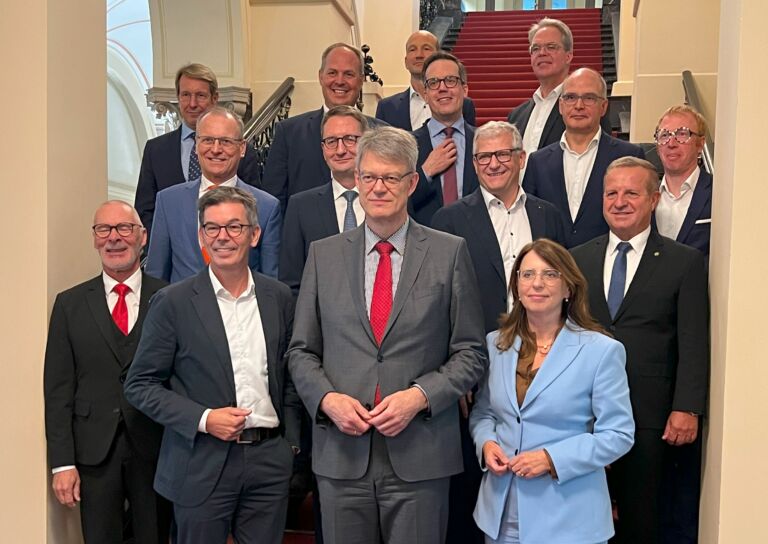
At a meeting of automotive and mobility associations at the Federal Ministry of Transport, Imelda Labbé, President of the Association of International Motor Vehicle Manufacturers (VDIK), called for leadership to be taken in order to create the necessary framework conditions for the ramp-up of electric mobility in collaboration with the relevant industry sectors and the ministries of economics, energy, digital affairs, environment, and finance. Uncoordinated action by the players involved would cause economic damage, jeopardize the achievement of climate targets, and put thousands of jobs at risk. Today, the Federal Ministry of Transport expressed confidence that the Charging Infrastructure III Master Plan, due to be published this year, will be an important building block in improving the framework conditions.
“The ramp-up of electric mobility by 2035 and the associated digitalization currently represent the greatest technological and economic challenge facing the automotive industry in decades. At the same time, the share of new electric vehicle registrations has been stagnating at around 18 percent for months, which is too low to achieve the CO2 targets. There is a threat of heavy penalties and the loss of thousands of jobs. Every day, new uncertainties arise, such as the current discussion about the possible end of the vehicle tax exemption for electric cars,” said VDIK President Imelda Labbé.
Labbé therefore called for a coherent, cross-sector and cross-departmental roadmap that involves all relevant players under the leadership of the BMV. The convening of the Expert Committee on Electric Mobility (EKMI) by the BMV was an important first step in this direction, but now the measures promised in the coalition agreement must be implemented urgently. Federal Minister Schnieder must establish “EKMI+” as the strategic platform for the market ramp-up of electric mobility. Holistic management by the Federal Ministry of Transport is crucial for this, as this is the only way to ensure speed, coherence, and commitment in implementation.
“A clear perspective is needed for the automotive industry and for potential electric car drivers. As long as there is no plan for the framework conditions for the ramp-up of electric mobility, the CO2 fleet limits and the targets for 2035 are not sustainable. The automotive industry cannot afford to develop electric and combustion engine technology in parallel while cross-subsidizing the ramp-up of BEVs from combustion engine revenues,” Labbé continued.
The VDIK’s call for comprehensive management through an e-mobility master plan involving all relevant ministries, the energy industry, the associations involved in the exchange, and other stakeholders remains in place. This is the only way to successfully reassess the CO2 targets.